
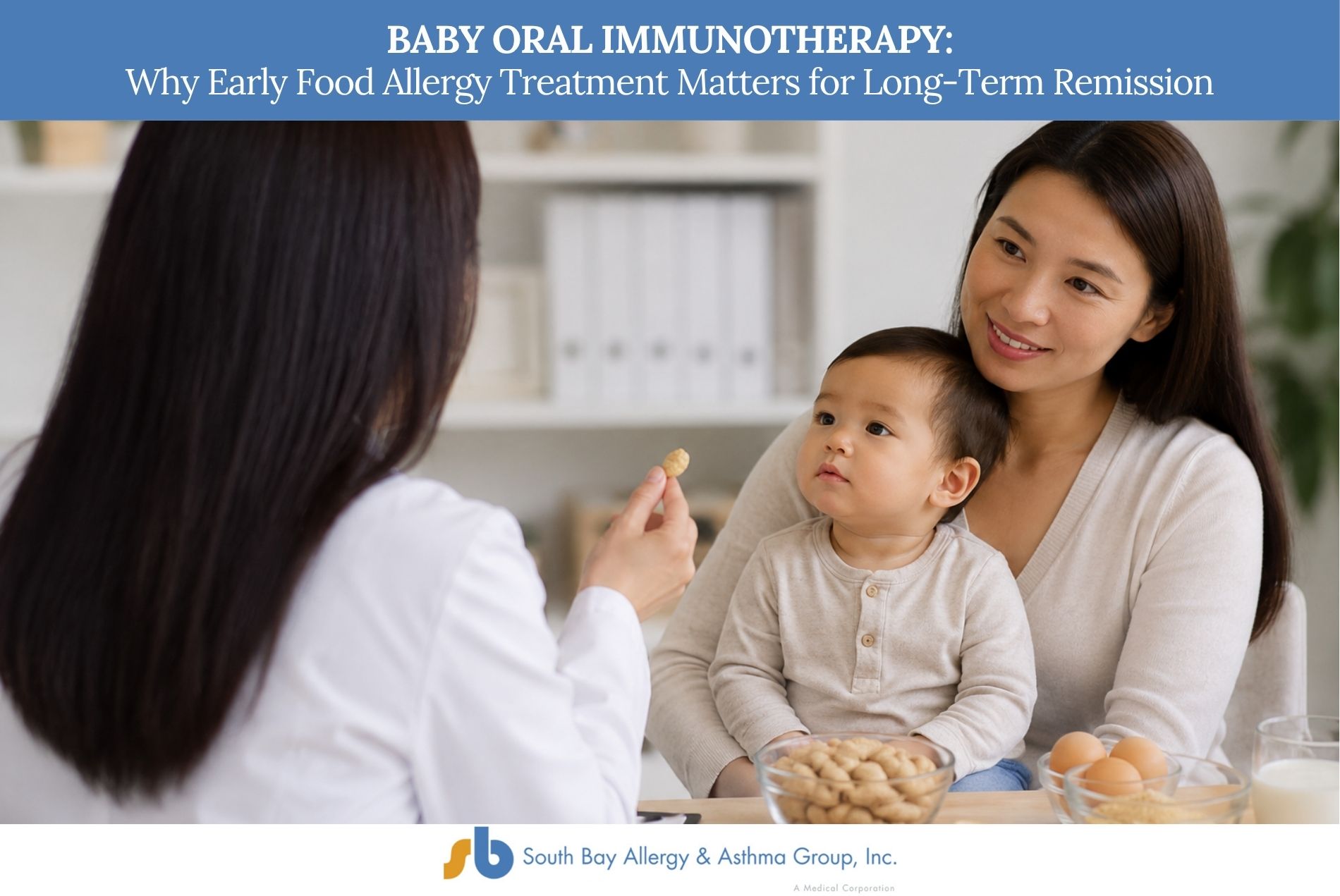
Food allergies in babies and young children are becoming increasingly common, leaving many parents searching for answers, relief, and long-term solutions. Fortunately, advances in allergy treatment are changing the outlook for children with food allergies. One of the most promising breakthroughs is oral immunotherapy (OIT) — especially when treatment begins early in life.
Recent research, including findings from the groundbreaking IMPACT Trial, has shown that starting oral immunotherapy during infancy and toddlerhood may significantly improve the chances of achieving food allergy remission. In fact, the study found that 71% of children 24 months or younger with peanut allergy achieved remission, while remission rates dropped sharply with each additional year of age. These findings highlight a critical concept known as the window of immune plasticity — a period in early childhood when the immune system is more adaptable and responsive to treatment.
At South Bay Allergy and Asthma Group, our board-certified allergy specialists help families throughout the Bay Area explore advanced treatment options for food allergies, asthma, eczema, and other allergic conditions.
What Is Oral Immunotherapy (OIT)?
Oral Immunotherapy (OIT) is a medically supervised treatment designed to gradually desensitize the immune system to a food allergen. During treatment, patients consume carefully measured, increasing doses of the allergenic food under the supervision of an allergy specialist.
The goal of OIT is to help the immune system become less reactive, reducing the risk of severe allergic reactions from accidental exposure, bite size exposure protection.
Common food allergies treated with OIT include:
- Peanut allergy
- Tree nut allergy
- Egg allergy
- Milk allergy
- Sesame allergy
- Wheat allergy
For many families, OIT offers hope for increased safety, peace of mind, and a better quality of life.
Understanding the IMPACT Trial
The IMPACT Trial was one of the most important studies examining early oral immunotherapy in young children with peanut allergy. Researchers discovered that children treated at younger ages had substantially higher remission rates.
Key Findings from the IMPACT Trial
- 71% of children 24 months or younger achieved remission
- Remission success rates decreased significantly with age
- Younger children responded more effectively due to increased immune flexibility
- Early intervention may help retrain the immune system before allergic responses become deeply established
These findings reinforce the importance of diagnosing and treating food allergies as early as possible.
The Critical Window of Immune Plasticity
One of the most important concepts in pediatric allergy care is immune plasticity.
During infancy and early toddlerhood, the immune system is still developing and adapting. This period represents a unique opportunity to influence how the immune system responds to allergens.
As children grow older:
- Allergic immune pathways become more established
- The body becomes less adaptable
- Long-term remission becomes more difficult to achieve
This is why allergy specialists increasingly emphasize early evaluation and early treatment for food allergies.
Why Early Food Allergy Treatment Matters
Starting treatment early may provide several important benefits:
Increased Chance of Remission
Research shows that younger children have a significantly higher likelihood of achieving remission through OIT.
Reduced Risk of Severe Reactions
OIT can help decrease sensitivity to allergens, lowering the risk of dangerous reactions from accidental exposure.
Improved Quality of Life
Parents and children often experience less anxiety surrounding meals, school, parties, and travel.
Potential Long-Term Immune Benefits
Early treatment may help guide the immune system toward long-lasting tolerance.
Signs Your Child May Have a Food Allergy
Food allergy symptoms can range from mild to severe. Common signs include:
- Hives or rash
- Swelling of the lips or face
- Vomiting after eating certain foods
- Wheezing or coughing
- Eczema flare-ups
- Difficulty breathing
- Anaphylaxis
If your child experiences allergic reactions after eating, it is important to schedule an evaluation with a board-certified allergist.
How South Bay Allergy and Asthma Group Can Help
At South Bay Allergy and Asthma Group, our experienced allergy specialists provide comprehensive food allergy evaluations and personalized treatment plans for children and adults.
We offer advanced care for:
- Food allergies
- Oral immunotherapy (OIT)
- Asthma
- Seasonal allergies
- Eczema
- Environmental allergies
- Allergy testing
- Immunotherapy treatments
Our team understands how stressful food allergies can be for families, and we are committed to providing compassionate, evidence-based care.
Frequently Asked Questions About Baby Oral Immunotherapy
What age is best to start oral immunotherapy?
Research suggests that younger children may experience the greatest benefits from OIT. Early childhood represents a critical period of immune plasticity when the immune system is more adaptable.
Is oral immunotherapy safe for babies and toddlers?
When performed under the supervision of experienced allergy specialists, OIT can be a safe and effective treatment option. Each treatment plan is carefully individualized based on the child’s medical history and allergy severity.
Can oral immunotherapy cure food allergies?
OIT is not considered a guaranteed cure, but it can significantly reduce allergic sensitivity. Some children may achieve remission, especially when treatment begins early.
What foods can be treated with OIT?
Common foods treated with oral immunotherapy include peanuts, tree nuts, milk, egg, wheat, and sesame.
How long does oral immunotherapy take?
Treatment timelines vary depending on the patient and allergen involved. Some patients may continue maintenance therapy for years.
What is remission in food allergy treatment?
Remission means the immune system no longer reacts significantly to the allergen even after stopping treatment for a period of time.
Does the chance of remission decrease with age?
Yes. Studies like the IMPACT Trial show that remission rates decline substantially with increasing age even by 3 to 4 years old, reinforcing the importance of early treatment.
Should my child see an allergist for eczema and food allergies?
Yes. Children with eczema are at higher risk for food allergies, and allergy evaluation may help identify triggers and treatment options.
Schedule an Appointment with South Bay Allergy and Asthma Group
If your child has food allergies, early intervention may make a meaningful difference. The specialists at South Bay Allergy and Asthma Group are here to help families navigate diagnosis, treatment, and long-term allergy management.
San Jose Office
South Bay Allergy and Asthma Group
2211 Moorpark Avenue Suite 130
San Jose, CA 95128
📞 Phone: (408) 286-1707
Los Gatos Office
South Bay Allergy and Asthma Group
14981 National Ave #3
Los Gatos, CA 95124
📞 Phone: (408) 358-1771
📞 Allergy Shot Station: 408-610-2647
Mountain View Office
South Bay Allergy and Asthma Group
2490 Hospital Drive, #209
Mountain View, CA 94040
📞 Phone: (650) 966-8201
📞 Allergy Shot Station: 650-938-6957
Redwood City Office
South Bay Allergy and Asthma Group
100 Arch St Suite 2
Redwood City, CA 94062
📞 Phone: (650) 362-4643
📞 Allergy Shot Station: 650-503-8796
🌐 Website: https://sballergy.com/
📅 Book an Appointment: https://sballergy.com/appointments/