
Living with eczema can be frustrating, uncomfortable, and sometimes confusing—especially when symptoms continue despite using moisturizers, creams, and avoiding common irritants. For many patients, an underlying contact allergy may be contributing to ongoing skin inflammation. At South Bay Allergy and Asthma Group, our board-certified allergy specialists help patients identify hidden triggers through advanced patch testing and personalized allergy care.
If you experience chronic eczema, unexplained rashes, or skin irritation from cosmetics or personal care products, understanding contact allergies may be the key to healthier skin.
What Is a Contact Allergy?
A contact allergy occurs when the immune system reacts to a substance that touches the skin. Unlike seasonal allergies or food allergies, contact allergies develop through repeated exposure to allergens over time.
When the skin comes into contact with an allergen, the immune system can trigger inflammation that causes:
- Redness
- Itching
- Dry or cracked skin
- Burning or stinging sensations
- Rash or blisters
- Persistent eczema flare-ups
Many patients are surprised to learn that everyday products they use regularly may be contributing to their symptoms.
Why Patients with Eczema Are at Higher Risk for Contact Allergies
Patients with eczema, also known as atopic dermatitis, often have a weakened or compromised skin barrier. This damaged skin barrier allows allergens, irritants, and chemicals to penetrate more easily into the skin.
Over time, repeated exposure increases the likelihood that the immune system becomes sensitized to these substances, leading to a contact allergy.
Common reasons eczema patients are more vulnerable include:
- Chronic skin inflammation
- Dry, cracked skin allowing allergen penetration
- Frequent use of multiple skincare products
- Ongoing exposure to fragrances, preservatives, and chemicals
- Repeated irritation from cosmetics and topical medications
This cycle of skin barrier damage and allergen exposure can make eczema increasingly difficult to control without identifying the underlying trigger.
Common Cosmetic and Personal Care Product Allergens
Many personal care and cosmetic products contain ingredients known to cause allergic skin reactions.
Common contact allergens include:
- Fragrances
- Preservatives
- Nickel
- Formaldehyde-releasing agents
- Hair dye chemicals
- Lanolin
- Essential oils
- Adhesives
- Sunscreen ingredients
- Topical antibiotics
- Nail cosmetics
Even products labeled “natural” or “hypoallergenic” can still contain ingredients capable of triggering allergic reactions.
What Is Patch Testing?
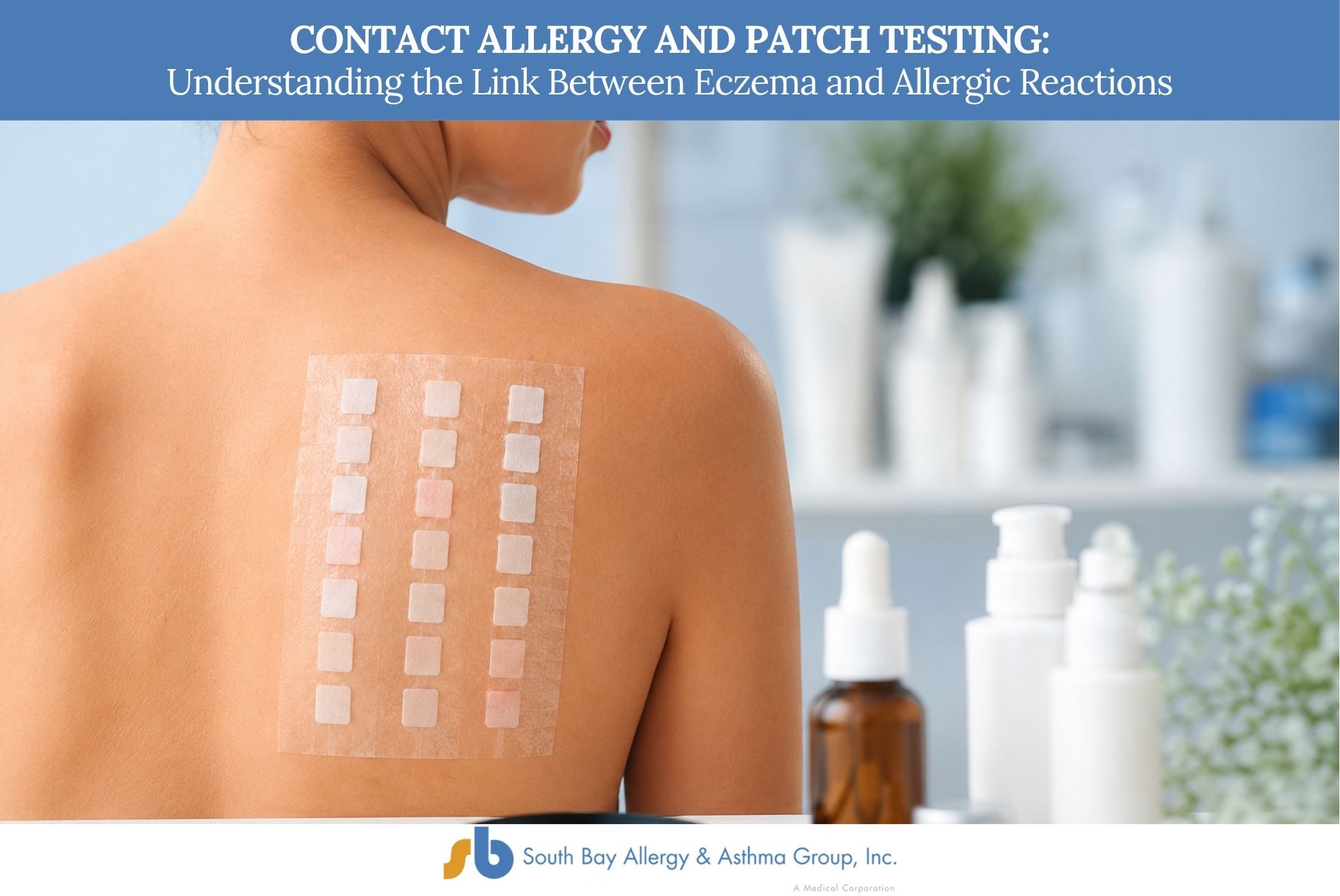
Patch testing is a specialized diagnostic procedure used to identify substances causing delayed allergic skin reactions.
Unlike skin prick testing, which evaluates immediate allergic reactions such as pollen or food allergies, patch testing focuses on identifying allergens responsible for eczema and dermatitis.
During patch testing:
- Small amounts of potential allergens are applied to the skin using adhesive patches.
- The patches remain on the skin for approximately 48 hours.
- Your allergy specialist evaluates the skin for reactions over several days.
- Results help identify substances contributing to chronic skin inflammation.
Patch testing is considered the gold standard for diagnosing allergic contact dermatitis.
Benefits of Patch Testing
Patch testing can provide significant relief and clarity for patients struggling with chronic eczema or unexplained rashes.
Benefits include:
- Identifying hidden allergic triggers
- Improving eczema management
- Reducing chronic inflammation
- Avoiding unnecessary medications
- Creating personalized skincare recommendations
- Improving quality of life
Many patients experience major improvements once problematic ingredients or products are identified and avoided.
Signs You May Need Patch Testing
You may benefit from patch testing if you experience:
- Chronic eczema that does not improve with treatment
- Recurring rashes on the face, hands, eyelids, or neck
- Skin irritation from cosmetics or skincare products
- Persistent itching or burning
- Reactions to jewelry, fragrances, or topical products
- Unexplained dermatitis
A consultation with an allergy specialist can help determine whether patch testing is appropriate for your condition.
Personalized Allergy Care at South Bay Allergy and Asthma Group
At South Bay Allergy and Asthma Group, our experienced allergy specialists provide comprehensive evaluation and treatment for eczema, allergic contact dermatitis, asthma, environmental allergies, food allergies, and more.
We understand how frustrating persistent skin conditions can be, and we work closely with patients to identify triggers and create personalized treatment plans designed for long-term relief.
Whether you are dealing with chronic eczema, cosmetic allergies, or unexplained skin irritation, our team is here to help.
Frequently Asked Questions About Contact Allergy & Patch Testing
What is the difference between eczema and contact dermatitis?
Eczema is a chronic inflammatory skin condition, while contact dermatitis occurs when the skin reacts to a specific allergen or irritant. Many patients with eczema can also develop contact allergies that worsen their symptoms.
Does patch testing hurt?
Patch testing is generally painless. Some patients may experience mild itching or irritation if they react to a specific allergen.
How long does patch testing take?
Patch testing usually takes several days. Patches are applied during the first visit and evaluated over follow-up appointments to assess delayed allergic reactions.
Can cosmetics cause eczema flare-ups?
Yes. Fragrances, preservatives, and other cosmetic ingredients can trigger allergic contact dermatitis and worsen eczema symptoms.
Is patch testing covered by insurance?
Coverage varies by insurance provider and plan. Please verify your benefits before your appointment, our staff can provide you with the insurance billing codes.
What products commonly trigger contact allergies?
Common triggers include fragrances, skincare products, shampoos, hair dyes, metals like nickel, preservatives, and topical medications.
Can children have patch testing?
Yes. Patch testing may be recommended for children with persistent eczema or unexplained skin rashes.
Will avoiding allergens cure my eczema?
Avoiding allergens can significantly improve symptoms in patients whose eczema is worsened by allergic contact dermatitis. However, eczema management often involves multiple treatment approaches.
How do I prepare for patch testing?
Your allergy specialist will provide detailed instructions before your appointment. Certain creams or medications may need to be avoided beforehand.
When should I see an allergy specialist for eczema?
You should consult an allergy specialist if your eczema is persistent, worsening, difficult to control, or possibly linked to skincare products or environmental triggers.
Schedule an Appointment Today
If you are struggling with eczema, chronic skin irritation, or suspected cosmetic allergies, the specialists at South Bay Allergy and Asthma Group can help identify the cause and guide you toward effective treatment options.
South Bay Allergy and Asthma Group
San Jose Office
2211 Moorpark Avenue Suite 130
San Jose, CA 95128
📞 Phone: (408) 286-1707
Los Gatos Office
14981 National Ave #3
Los Gatos, CA 95124
📞 Phone: (408) 358-1771
📞 Allergy Shot Station: 408-610-2647
Mountain View Office
2490 Hospital Drive, #209
Mountain View, CA 94040
📞 Phone: (650) 966-8201
📞 Allergy Shot Station: 650-938-6957
Redwood City Office
100 Arch St Suite 2
Redwood City, CA 94062
📞 Phone: (650) 362-4643
📞 Allergy Shot Station: 650-503-8796
🌐 Website: sballergy.com
📅 Book an Appointment: https://sballergy.com/appointments/