
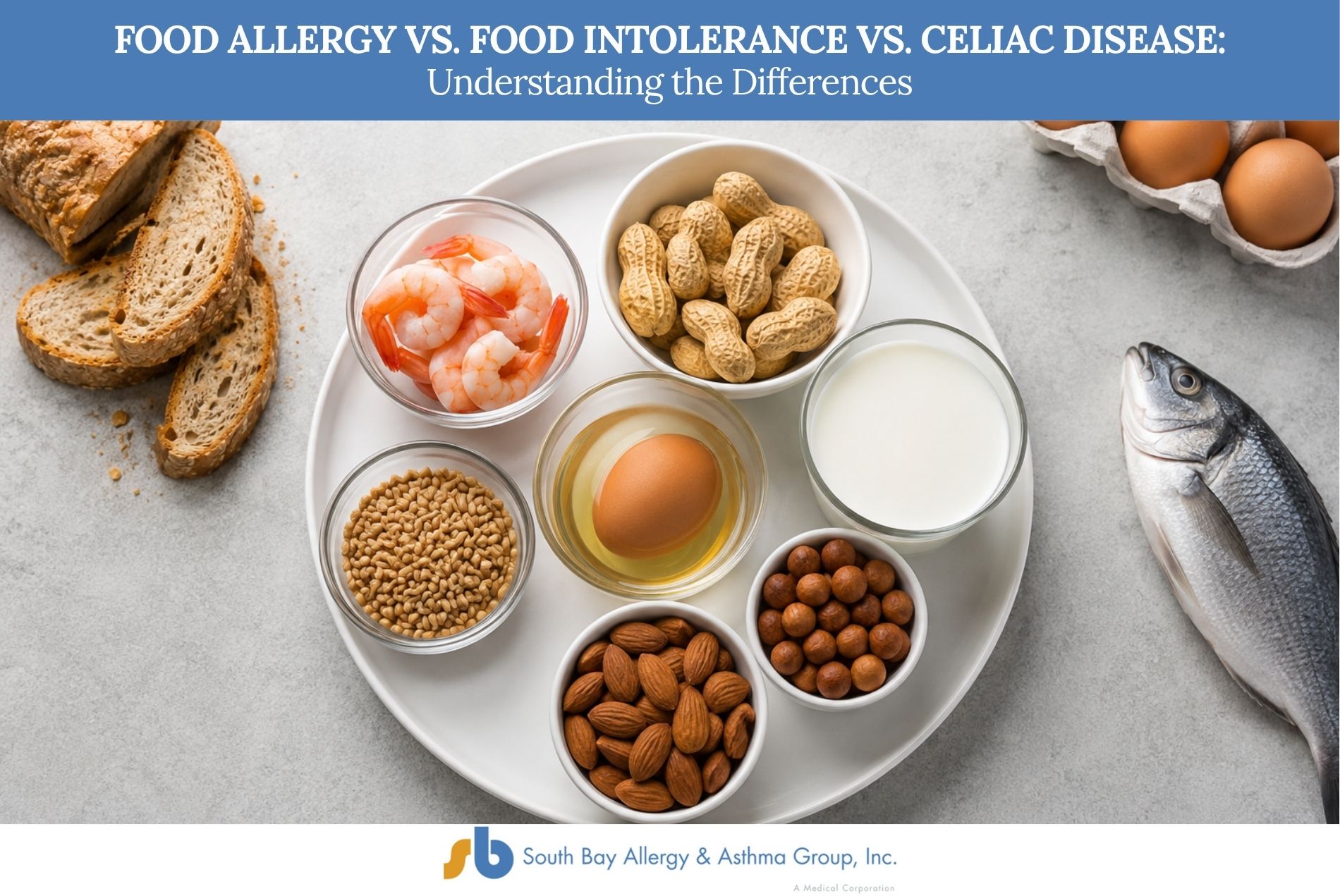
If certain foods leave you feeling sick, uncomfortable, or worried about your health, you are not alone. Millions of people experience reactions to foods every day, but many are unsure whether they are dealing with a true food allergy, a food intolerance, or celiac disease. While these conditions may share some symptoms, they are very different in how they affect the body, how they are diagnosed, and how they are treated.
At South Bay Allergy and Asthma Group, our experienced allergy specialists help patients throughout the Bay Area identify the cause of food-related symptoms and create personalized treatment plans that improve quality of life. Understanding the difference between these conditions is the first step toward getting the right care.
What Is a Food Allergy?
A food allergy occurs when the immune system mistakenly identifies a food protein as harmful and launches an immune response. Even a tiny amount of the food can trigger symptoms, and reactions can range from mild to life-threatening.
Common Food Allergens
The most common food allergens include:
- Peanuts
- Tree nuts
- Milk
- Eggs
- Wheat
- Soy
- Sesame
- Fish
- Shellfish
Symptoms of Food Allergies
Food allergy symptoms usually appear quickly after eating the trigger food and may include:
- Hives or skin rash
- Swelling of the lips, tongue, or throat
- Itching
- Difficulty breathing
- Wheezing
- Nausea or vomiting
- Abdominal pain
- Dizziness
- Anaphylaxis (a severe allergic reaction)
How Food Allergies Are Diagnosed
An allergist may use:
- Detailed medical history
- Skin prick testing
- Blood testing for food-specific antibodies
- Oral food challenges when appropriate
Proper diagnosis is essential because avoiding foods unnecessarily can negatively impact nutrition and quality of life.
What Is Food Intolerance?
A food intolerance is different from a food allergy because it does not involve the immune system. Instead, the body has difficulty digesting or processing certain foods.
Food intolerances are often uncomfortable but are generally not life-threatening.
Common Food Intolerances
Some common intolerances include:
- Lactose intolerance
- Non-celiac gluten sensitivity
- Sensitivity to food additives
- Caffeine sensitivity
- Certain carbohydrate intolerances
Lactose Intolerance Explained
One of the most common misunderstandings is confusing lactose intolerance with a milk allergy.
- Lactose intolerance is an inability to digest lactose, the sugar found in milk.
- It is not an allergy.
- Symptoms occur because the body lacks enough lactase enzyme to properly digest milk sugar.
Symptoms may include:
- Bloating
- Gas
- Diarrhea
- Abdominal discomfort
Unlike a milk allergy, lactose intolerance does not involve the immune system and does not cause anaphylaxis.
There Is No Standardized Testing for Food Intolerance
One important fact patients should know is that there is no standardized or scientifically validated testing for food intolerance. Many commercial tests marketed online are not reliable and can lead to unnecessary food restrictions. They often test for food IgGs which are tolerated proteins, reflecting normal immune exposure and processing of food antigens.
The Best Approach: An Elimination Diet
The most effective method for evaluating possible food intolerance is often an elimination diet guided by a healthcare professional.
This process typically involves:
- Removing the suspected food from the diet for a short period of time, ~2 weeks
- Monitoring symptoms carefully
- Reintroducing the food gradually to see whether symptoms return
Why Reintroducing Foods Matters
If eliminating a food does not improve symptoms, it is important to add the food back into the diet. Unnecessary food avoidance can:
- Limit nutrition
- Increase stress around eating
- Reduce dietary variety
- Impact quality of life
At South Bay Allergy and Asthma Group, we help patients avoid unnecessary dietary restrictions while identifying the true source of symptoms.
What Is Celiac Disease?
Celiac disease is an autoimmune condition triggered by gluten, a protein found in wheat, barley, and rye. In people with celiac disease, eating gluten damages the lining of the small intestine.
Unlike a food allergy, celiac disease is not caused by IgE-mediated allergic reactions. However, it is a serious medical condition that requires lifelong management.
Symptoms of Celiac Disease
Symptoms may include:
- Chronic diarrhea
- Abdominal pain
- Bloating
- Fatigue
- Weight loss
- Nutritional deficiencies
- Skin rash
- Joint pain
Some people have very mild symptoms or no digestive symptoms at all.
Important: You Must Be Eating Wheat Before Celiac Testing
One of the most important things to know about celiac disease testing is this:
For celiac blood testing to be accurate, patients need to be eating wheat or gluten before the test.
If someone removes gluten from their diet before testing, the blood test may appear falsely normal even if they actually have celiac disease.
Because of this, patients should speak with their doctor before starting a gluten-free diet if celiac disease is suspected.
Why Proper Diagnosis Matters
Because food allergies, intolerances, and celiac disease can have overlapping symptoms, proper evaluation by a qualified specialist is essential.
Incorrect self-diagnosis can lead to:
- Unnecessary dietary restrictions
- Missed medical conditions
- Poor nutrition
- Anxiety around eating
- Delayed treatment
At South Bay Allergy and Asthma Group, our board-certified specialists provide comprehensive allergy evaluations and evidence-based care to help patients find answers and feel better.
Frequently Asked Questions (Q&A)
What is the difference between a food allergy and food intolerance?
A food allergy involves the immune system and can cause severe or life-threatening reactions. A food intolerance does not involve the immune system and usually causes digestive symptoms.
Is lactose intolerance the same as a milk allergy?
No. Lactose intolerance is the inability to digest milk sugar (lactose). A milk allergy involves the immune system reacting to milk proteins.
Can food intolerance testing be done with a blood test?
There is currently no standardized or scientifically validated blood test for food intolerance. Elimination diets are typically the most effective approach.
What happens during an elimination diet?
A suspected food is removed from the diet temporarily while symptoms are monitored. The food is later reintroduced to determine whether it truly causes symptoms.
Why should foods be added back if symptoms do not improve?
Keeping foods out of the diet unnecessarily can limit nutrition and reduce dietary variety. If symptoms do not improve, the food may not be the cause.
What foods contain gluten?
Gluten is found in wheat, barley, and rye.
Can I stop eating gluten before being tested for celiac disease?
It is best not to stop eating gluten before testing. For celiac blood testing to be accurate, patients need to be eating wheat or gluten beforehand.
Can food allergies develop later in life?
Yes. Both children and adults can develop food allergies.
Are food allergies dangerous?
They can be. Some food allergies may cause anaphylaxis, which is a medical emergency requiring immediate treatment.
When should I see an allergist?
You should see an allergist if you experience:
- Reactions after eating
- Hives or swelling
- Breathing problems after food exposure
- Chronic digestive symptoms
- Concerns about food allergies or intolerances
Contact South Bay Allergy and Asthma Group
San Jose Office
South Bay Allergy and Asthma Group
2211 Moorpark Avenue Suite 130
San Jose, CA 95128
📞 Phone: (408) 286-1707
Los Gatos Office
South Bay Allergy and Asthma Group
14981 National Ave #3
Los Gatos, CA 95124
📞 Phone: (408) 358-1771
📞 Allergy Shot Station: 408-610-2647
Mountain View Office
South Bay Allergy and Asthma Group
2490 Hospital Drive, #209
Mountain View, CA 94040
📞 Phone: (650) 966-8201
📞 Allergy Shot Station: 650-938-6957
Redwood City Office
South Bay Allergy and Asthma Group
100 Arch St Suite 2
Redwood City, CA 94062
📞 Phone: (650) 362-4643
📞 Allergy Shot Station: 650-503-8796
🌐 Website: sballergy.com
📅 Book An Appointment: https://sballergy.com/appointments/