
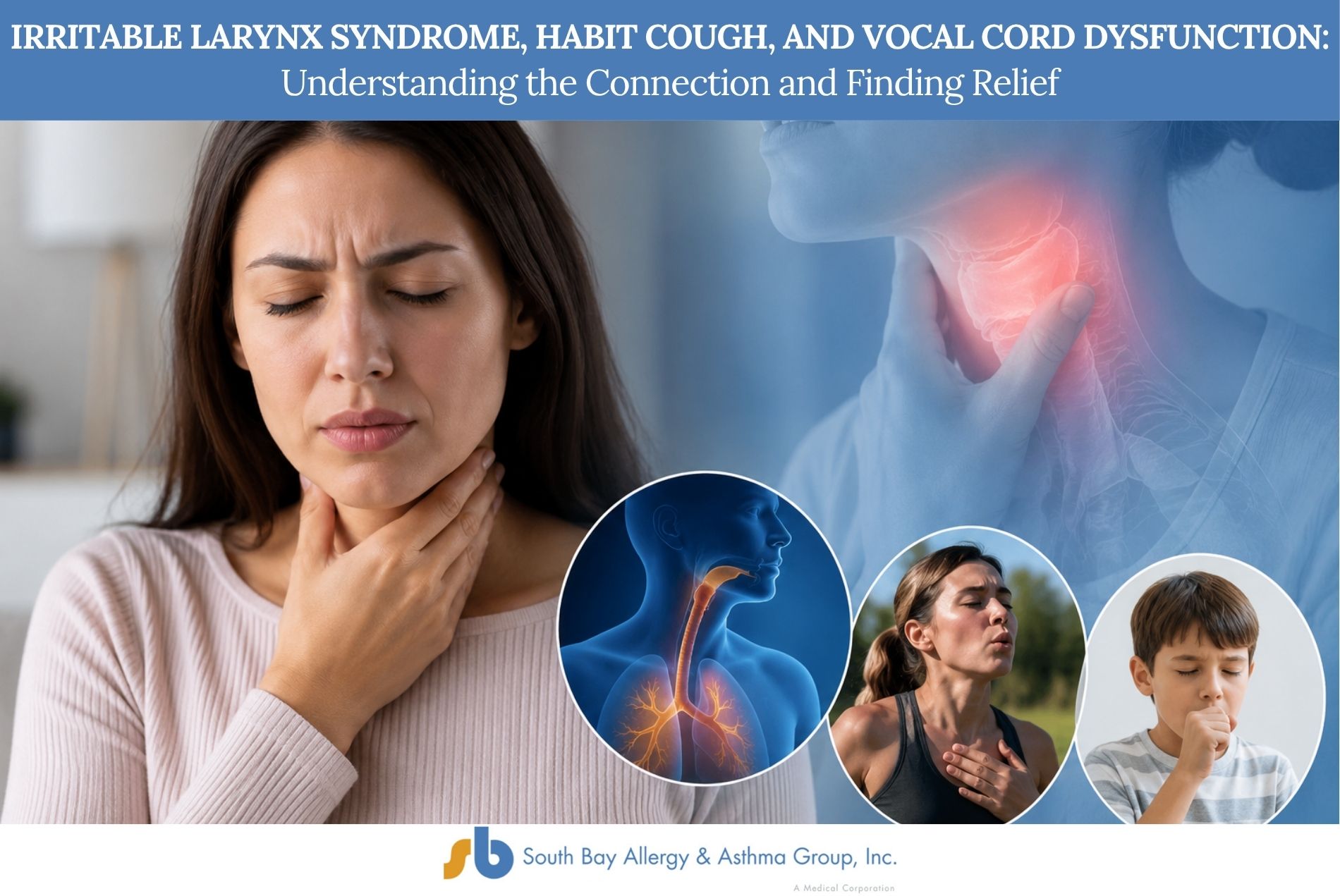
Breathing and speaking should feel natural and effortless. But for many children, teens, and adults, chronic coughing, throat tightness, hoarseness, or sudden breathing difficulty can become frustrating daily struggles. Conditions such as Irritable Larynx Syndrome (ILS), Habit Cough, and Vocal Cord Dysfunction (VCD) are often misunderstood and misdiagnosed because their symptoms can closely resemble asthma, allergies, reflux, or respiratory infections.
At South Bay Allergy and Asthma Group, our specialists help patients throughout the Bay Area identify the true cause of chronic throat and breathing symptoms. Through advanced evaluation, personalized treatment plans, and compassionate care, we help patients regain comfort, confidence, and control over their health.
What Is Irritable Larynx Syndrome?
Irritable Larynx Syndrome (ILS) is a condition in which the larynx, or voice box, becomes hypersensitive and overreactive. The throat becomes easily irritated by triggers that normally would not cause symptoms.
Patients with ILS may experience:
- Chronic throat clearing
- Persistent dry cough
- Sensation of a lump in the throat
- Hoarseness or voice changes
- Throat tightness
- Frequent coughing fits
- Difficulty breathing during episodes
- Sensitivity to smoke, odors, cold air, or talking
The condition often develops after prolonged irritation from allergies, postnasal drip, acid reflux, infections, or repeated coughing.
Understanding Habit Cough
Habit cough, sometimes called psychogenic cough or somatic cough syndrome, is a repetitive cough that continues even after the original illness or irritation has resolved. It is especially common in children and adolescents but can affect adults as well.
Common Features of Habit Cough
- Loud, repetitive dry cough
- Cough disappears during sleep
- Symptoms worsen with stress or attention
- Normal lung exams and testing
- Little improvement with traditional cough medications
Habit cough often begins after a viral infection, allergy flare-up, or respiratory illness. Even after recovery, the cough reflex becomes “stuck,” causing ongoing coughing episodes.
Because habit cough can mimic asthma or chronic bronchitis, accurate diagnosis is essential.
What Is Vocal Cord Dysfunction (VCD)?
Vocal Cord Dysfunction occurs when the vocal cords close abnormally during breathing, making it difficult for air to move through the throat properly.
VCD symptoms can closely resemble asthma, but the underlying problem is different.
Symptoms of VCD
- Sudden shortness of breath
- Throat tightness
- Noisy breathing or wheezing
- Difficulty inhaling
- Chronic cough
- Hoarse voice
- Symptoms triggered by exercise, stress, strong odors, or irritants
Many patients with VCD are initially treated for asthma without significant improvement. Proper evaluation by allergy and asthma specialists can help distinguish between asthma and VCD.
How Allergies and Asthma Can Contribute
Allergies and asthma often play a major role in Irritable Larynx Syndrome, Habit Cough, and VCD.
Common Triggers Include:
- Seasonal allergies
- Environmental allergens
- Postnasal drip
- Asthma flare-ups
- Acid reflux
- Respiratory infections
- Smoke exposure
- Strong fragrances or chemicals
When inflammation or irritation affects the airways and throat, the larynx may become overly sensitive, leading to chronic symptoms.
At South Bay Allergy and Asthma Group, we evaluate the full picture to identify all contributing factors.
Diagnosing Irritable Larynx Syndrome, Habit Cough, and VCD
Proper diagnosis is critical because these conditions are often mistaken for asthma, bronchitis, anxiety, or recurrent infections.
Evaluation May Include:
- Detailed symptom history
- Allergy testing
- Pulmonary function testing
- Asthma evaluation
- Assessment for reflux or postnasal drip
- Laryngoscopy by ENT specialists when needed
- Speech therapy
Our specialists work closely with patients to identify symptom triggers and create individualized treatment plans.
Treatment Options
Treatment focuses on calming airway irritation, reducing triggers, and retraining breathing or cough patterns.
Common Treatment Approaches
Allergy Management
Treating allergies can significantly reduce throat irritation and inflammation.
Asthma Control
Proper asthma management helps minimize airway sensitivity and coughing episodes.
Speech Therapy
Speech-language pathologists can teach breathing exercises and vocal techniques that improve VCD and chronic cough symptoms.
Behavioral Techniques
Habit cough often improves with cough suppression strategies and relaxation methods.
Reflux Management
Addressing acid reflux can reduce laryngeal irritation.
Trigger Avoidance
Reducing exposure to smoke, fragrances, allergens, and irritants can prevent flare-ups.
Why Specialized Care Matters
Because these conditions overlap with asthma and allergy symptoms, patients often spend months or years searching for answers.
At South Bay Allergy and Asthma Group, our experienced allergy and asthma specialists provide comprehensive evaluations to uncover the root cause of chronic cough and breathing issues.
We focus on:
- Accurate diagnosis
- Personalized care plans
- Long-term symptom management
- Education and support
- Advanced allergy and asthma treatment options
Frequently Asked Questions (Q&A)
What causes Irritable Larynx Syndrome?
ILS develops when the voice box becomes hypersensitive due to repeated irritation from allergies, reflux, infections, smoke exposure, or chronic coughing.
Is Habit Cough psychological?
Habit cough is real and involuntary. Stress or attention may worsen symptoms, but the condition often begins after an illness or airway irritation.
How is Vocal Cord Dysfunction different from asthma?
Asthma affects the lower airways in the lungs, while VCD affects the vocal cords in the throat. Many patients with VCD feel difficulty breathing in, while asthma typically causes difficulty breathing out. Generally there is minimal cough associated with VCD and albuterol is not effective.
Can allergies trigger chronic coughing?
Yes. Allergies can cause postnasal drip, throat irritation, inflammation, and coughing that contribute to ILS and Habit Cough.
Can children develop Habit Cough?
Yes. Habit cough is especially common in school-aged children and adolescents.
Does VCD cause wheezing?
Yes. VCD can create wheezing or noisy breathing sounds that are often mistaken for asthma, usually when breathing in.
Can stress worsen these conditions?
Stress and anxiety can worsen symptoms, especially with Habit Cough and Vocal Cord Dysfunction.
How is Vocal Cord Dysfunction treated?
Treatment may include breathing exercises, speech therapy, trigger avoidance, allergy treatment, and stress management techniques.
When should I see an allergy and asthma specialist?
You should seek evaluation if you experience:
- Chronic cough lasting more than several weeks
- Unexplained breathing difficulty
- Frequent throat clearing
- Hoarseness
- Symptoms not improving with asthma medications
- Recurrent coughing fits
Can these conditions be treated successfully?
Yes. With proper diagnosis and treatment, most patients experience significant improvement in symptoms and quality of life.
Contact South Bay Allergy and Asthma Group
San Jose Office
South Bay Allergy and Asthma Group
2211 Moorpark Avenue Suite 130
San Jose, CA 95128
📞 Phone: (408) 286-1707
Los Gatos Office
South Bay Allergy and Asthma Group
14981 National Ave #3
Los Gatos, CA 95124
📞 Phone: (408) 358-1771
📞 Allergy Shot Station: 408-610-2647
Mountain View Office
South Bay Allergy and Asthma Group
2490 Hospital Drive, #209
Mountain View, CA 94040
📞 Phone: (650) 966-8201
📞 Allergy Shot Station: 650-938-6957
Redwood City Office
South Bay Allergy and Asthma Group
100 Arch St Suite 2
Redwood City, CA 94062
📞 Phone: (650) 362-4643
📞 Allergy Shot Station: 650-503-8796
🌐 Website: sballergy.com
📅 Book An Appointment: https://sballergy.com/appointments/